

General Orthopedics
General Orthopedics
Are pain, an injury or a movement problem affecting your daily activities? OrthoMO provides general orthopedic care in Creve Coeur and Cape Girardeau, Missouri. Our orthopedic doctors evaluate your concerns, explain your treatment options and help you understand whether nonsurgical or surgical care may be appropriate.

-

Sports Medicine
Stay active with sports medicine care addressing musculoskeletal injuries, movement problems and rehabilitation needs. -
Workers' Compensation
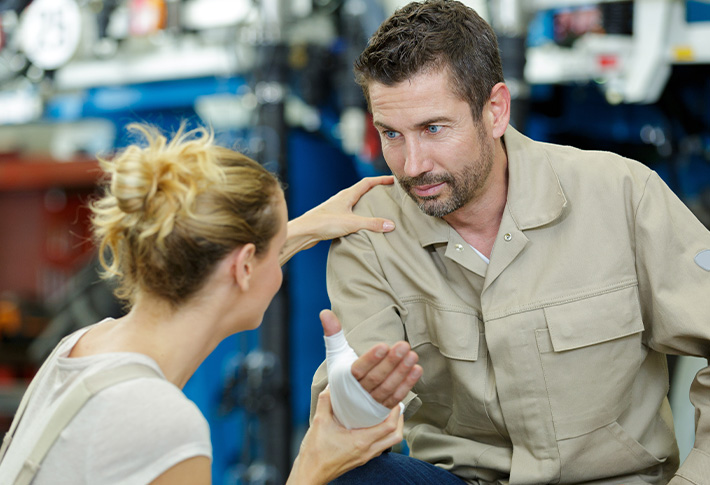
Move toward recovery from a work-related injury with orthopedic services and rehabilitation focused on restoring movement, strength and function. -

Biologics
Explore biologic treatment options that may support healing in certain musculoskeletal conditions.
What Is General Orthopedics?
General orthopedics focuses on the musculoskeletal system, the interconnected bones, joints, muscles, ligaments, tendons and nerves that help you move, work and stay active. It includes the prevention, evaluation, diagnosis and treatment of injuries and conditions, as well as rehabilitation to help restore movement, strength and function. Care may be nonsurgical or surgical.
What Do General Orthopedic Doctors Treat?
General orthopedic doctors treat conditions that may be present from birth, develop over time or result from injury, overuse or age-related wear and tear. Their care may address:
- Joint, Limb and Shoulder Conditions: Arthritis, joint pain, bone fractures, muscle strains and soft-tissue injuries affecting the ankle and foot, elbow, hand, hip, knee, shoulder or wrist. Soft-tissue injuries affect the muscles, tendons or ligaments.
- Sports and Overuse Injuries: Sprains, tendinitis, meniscus tears and anterior cruciate ligament (ACL) tears.
- Spine and Neck Conditions: Back pain, neck pain and spinal disorders.
- Nerve-Related Conditions: Carpal tunnel syndrome.
- Conditions Present From Birth: Clubfoot, bowlegs, scoliosis and other limb abnormalities.
- Bone and Chronic Conditions: Bone tumors, bone cancer, chronic pain, movement problems and chronic tendon conditions.
When to See an Orthopedic Doctor
See an orthopedic doctor when you have:
- Pain or swelling in a bone, joint or muscle that keeps coming back, lasts more than three months or does not improve with at-home care
- Limited movement or range of motion in a joint
- Trouble standing, walking or moving around
- Numbness, tingling or a “pins and needles” feeling in your arms or legs
You may also schedule an appointment with an orthopedic surgeon after another doctor recommends surgery or when you want a second opinion about a diagnosis or treatment recommendation.
However, some injuries require immediate medical attention. Go to the nearest emergency room if you have:
- A broken bone, especially if the bone is visible or you have multiple fractures
- Intense pain with a fever, inability to bear weight or move a limb, severe bleeding or loss of consciousness
During your appointment with OrthoMO, your doctor may ask about your symptoms, review your medical history, perform a physical examination and review previous X-rays. Additional tests may be ordered to help confirm the cause of your symptoms.
Do Orthopedic Doctors Do Surgery?
Orthopedic doctors use both nonsurgical and surgical approaches to help treat musculoskeletal conditions. Seeing an orthopedic surgeon in Creve Coeur does not necessarily mean you will need surgery. Doctors often consider nonsurgical or “conservative” treatment before recommending an operation.
Nonsurgical treatment may include:
- Exercises and Stretches: Specific movements to help maintain or improve strength, flexibility and range of motion.
- Physical Therapy and Rehabilitation: Guided care to help restore movement, strength, flexibility and function after an injury or surgery.
- Medication: Over-the-counter medicines, such as ibuprofen or aspirin, may help relieve pain and swelling. Doctors may also prescribe corticosteroids or anti-inflammatory medicine.
- Injections: Medication may be injected to help manage symptoms or inflammation.
- Bracing, Splints and Casts: These forms of immobilization limit movement or additional strain while an area heals.
- Lifestyle Changes: Adjustments to physical activity, diet and exercise may help prevent an injury or condition from becoming worse.
When an injury or condition does not improve with conservative treatment, surgery may be considered. Surgical treatment may include:
- Joint Replacement: Replacing damaged or diseased parts of a joint, such as the hip or knee, with a prosthesis.
- Arthroscopy: A minimally invasive procedure that uses a small camera and instruments to look inside and treat problems in a joint.
- Fracture Repair and Internal Fixation: Using implants such as pins, screws, plates or rods to stabilize a severely broken bone while it heals.
- Bone Grafting: Using bone from the patient’s body, a donor or a synthetic substitute to help repair and strengthen damaged bone.
- Fusion: Joining two bones so they heal into one bone.
- Osteotomy: Cutting and repositioning part of a bone.
- Soft-Tissue Repair: Repairing severely damaged muscles, ligaments or tendons.
- Release Surgery: Relieving pressure on a nerve, such as during surgery for carpal tunnel syndrome.
How to Prepare for General Orthopedic Surgery
Before surgery, your orthopedic surgeon will explain what the procedure involves, why it is being considered, possible risks and benefits, expected recovery, pain management and when you may return to activities such as work, driving or sports.
Follow your surgeon’s instructions about medications, diet, exercise and physical restrictions. Take prescribed medication as directed and stop any medication only if your surgeon tells you to. When you go home, review the materials your surgeon provided. Contact your orthopedic care team if you do not understand your instructions or develop side effects, complications or worsening symptoms.
Frequently Asked Questions
Casts and splints support and protect injured bones and soft tissue while helping reduce pain, swelling and muscle spasms. A splint may be used for a fresh injury while swelling subsides. A full cast may follow, and a splint may later be used to make therapy easier.
Doctors may use a splint for a fresh injury because it can accommodate swelling. As swelling decreases, a full cast may replace it to provide more support. In some cases, a splint may be used again as the injury heals because it can be removed more easily for therapy.
Contact your orthopedic office immediately if you have increased pain, numbness or tingling, burning or stinging, excessive swelling below the cast or loss of active finger movement. These symptoms may indicate pressure on the skin or nerves, reduced blood circulation or a cast or splint that is too tight.
Keep your cast or splint dry and protect it with a plastic bag or wrap while bathing. If it gets wet, blot it with a towel and dry it completely with a cool hair dryer. Do not trim, reshape or remove it, and never place anything inside it to scratch.
No. Do not remove a custom-made cast or splint yourself because you could cut your skin or interfere with proper healing. Your orthopedic care team uses specialized tools to remove it safely. Contact the office if it feels too tight, irritates your skin or becomes damaged.
Cortisone is a synthetic steroid that can reduce inflammation, swelling and pain when injected into a specific area. A local injection is less complicated than surgery and may provide lasting pain relief. Sometimes, more than one injection is needed for the treatment to be effective.
Each physician may accept different insurance plans, but most OrthoMO physicians accept major insurance carriers. Contact your OrthoMO physician’s team or insurance company before care to confirm coverage and understand what costs may apply.
Most OrthoMO surgeons use the Orthopedic Surgery Center of Creve Coeur, located next door to OrthoMissouri. Some patients may prefer a different ambulatory surgery center, which is a facility for same-day procedures. Ask your OrthoMO physician about the available options.
OrthoMO has a Durable Medical Equipment (DME) department that can support patients who need home medical or assistive equipment. Ask your OrthoMO physician’s team about the equipment and support available for your care.
OrthoMO has a physical therapy clinic located down the hall from OrthoMissouri. Your physician may also connect you with another physical therapy clinic that is closer to your home. Physical therapy may help restore movement, strength, range of motion and flexibility after an injury or surgery.
If occupational therapy is recommended, your OrthoMO physician can connect you with convenient occupational therapy options. Ask your physician’s team for details about the options available for your care.
Find an Orthopedic Doctor
If discomfort is affecting how you work or move, OrthoMO can help you understand what may be causing it and what care options may fit your needs.
Request an appointment in Creve Coeur or Cape Girardeau. Our team is here to listen, answer your questions and help you determine what comes next for your orthopedic treatment.